Why Sustainability Reporting Is the new Business Advantage
Discover how sustainability reporting enhances transparency, boosts stakeholder trust, and drives long-term business growth.
Why Sustainability Reporting Is the new Business Advantage
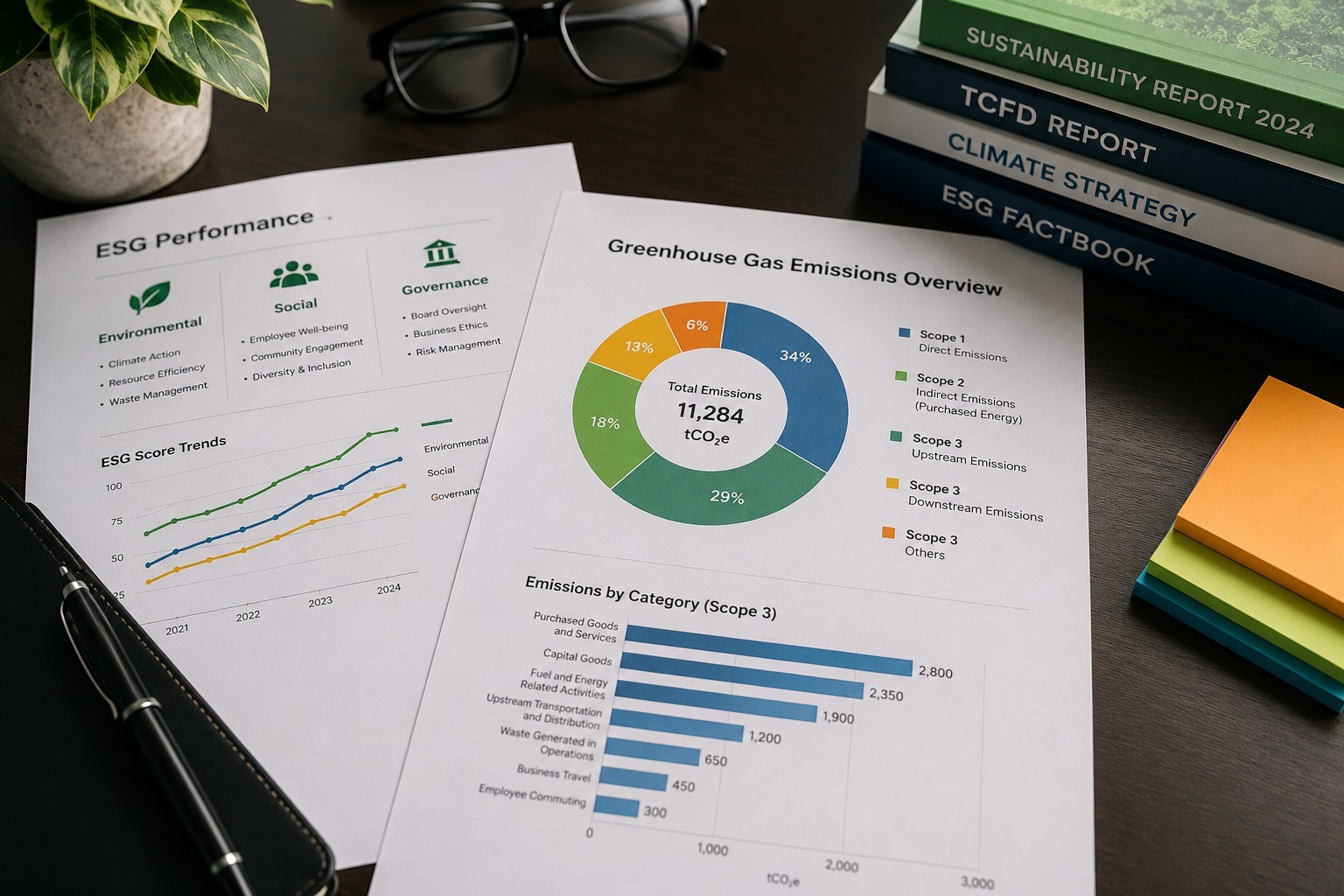
As climate change accelerates, the need to pursue sustainable choices has become increasingly important and each developmental step now needs an efficient calculation for sustainable choices than ever. Being the major component of overall Green House Gas (GHG) emissions, Scope 3 and supply chain mapping now take precedence over simple scope 1 and 2 emission reporting, with tougher compliance standards and higher levels of accountability. Sustainability Reporting: The Opportunity
Businesses today operate in an environment where openness is no longer an option but is a need with regulatory compliance and an upper advantage with stakeholder trust, sustenance and future proofing.
Customers want to know where their products come from, investors want to be confident in the long-term viability of a company, regulators are imposing greater transparency requirements, and employees are increasingly preferring firms that exhibit genuine environmental and social responsibility.
Here is where, Sustainability reporting transforms from a compliance exercise to a strategic asset. Organizations that track and communicate their Environmental, Social, and Governance (ESG) performance are better positioned to foster trust, increase efficiency, minimize risks, and create new economic opportunities.
Sustainability Reporting – the Hero today
Measuring, tracking, and disclosing a company’s environmental, social, and governance performance, is not only a reporting but a process that enables transparency to sustainability risks, capturing opportunities, and creating long-term value along with building resilience with increasing geo-political and climate risks.
Effective sustainability report encompasses key performance indicators across areas such as
* GHG emissions and carbon footprint
* Energy efficiency and water resource management
* Waste generation, recycling, and circular economy initiatives
* Occupational health, safety, and employee well-being
* Diversity, equity, and inclusion (DE&I) performance
* Responsible and sustainable supply chain practices
* Corporate governance, ethics, and compliance
The structure of the Sustainability report of an organisation tells the story of how an organization creates long-term value while managing environmental and social impacts. Material topics Centred on sustainability reporting
While sustainability reporting has grown important in all industries, the priorities and reporting requirements differ greatly depending on the nature of the business operations. Organizations should report on the ESG issues that are most relevant to their sector and stakeholders.
The material topics for each of the industries depend on the use of resources, service areas, type of stakeholders involved, supply chain and other domain specific factors that highly shape the ESG metrices of an organisation. Secondary factors impacting the reporting structures are global climate risk, geographical disasters, geo political synergies, trade deals, war and other regional upsurgence.
In addition to supporting regulatory compliance, a well-thought-out sustainability reporting plan boosts investor confidence, fortifies brand reputation, increases operational effectiveness, and promotes well-informed decision-making.
Companies are better positioned to satisfy changing stakeholder expectations and provide long-term commercial value when they align their reporting with internationally recognized frameworks like GRI – Global Reporting Initiative; IFRS S1 – General Requirements for Disclosure of Sustainability-related Financial Information; IFRS S2 – Climate-related Disclosures; CSRD – Corporate Sustainability Reporting Directive; SASB – Sustainability Accounting Standards Board; TCFD – Task Force on Climate-related Financial Disclosures. Or industry-specific standards.
The first step is not to gather data but is to know which reporting framework your organization should align with. Use the table below as a starting point.
| Industry | Primary ESG Focus/Material Topics | Key Reporting Frameworks | | Manufacturing | Carbon, Energy, Waste, Water | GRI, IFRS S1/S2, CSRD, SASB | | IT Services | Data Canters, DE&I, Cybersecurity, Responsible AI | GRI, IFRS S1/S2, SASB | | Telecom | Energy, E-waste, Supply Chain | GRI, IFRS S1/S2, CSRD | | Banking | Sustainable Finance, Governance, Climate Risk | IFRS S1/S2, SASB, TCFD | | Healthcare | Patient Safety, Waste, Ethics | GRI, SASB | | Retail | Sustainable Products, Packaging, Supply Chain | GRI, CSRD | | Energy & Utilities | Decarbonization, Biodiversity, Climate Risk | GRI, IFRS S2, TCFD | | Construction | Materials, Worker Safety, Water | GRI, CSRD | Quick readiness check for Reporting requirements
Consider the following questions as a quick checklist before beginning the reporting journey for a in house reporting assessment and readiness check.
ESG Reporting Readiness Checklist
Before you begin your sustainability reporting journey, ask yourself:
* Applicable sustainability reporting framework(s) identified (GRI, CSRD, IFRS S1 & S2, BRSR, SASB, etc.)
* Materiality assessment completed to identify priority ESG topics
* ESG data collection processes established across operations and the value chain
* Clear ownership and accountability defined for ESG data and reporting
* Capability to measure and report key ESG metrics, including GHG emissions, energy, water, waste, and social indicators
* Internal controls and governance processes in place to ensure data quality and audit readiness
* Systems available to consolidate ESG data from multiple business functions and locations
* ESG goals, KPIs, and performance targets established with a monitoring roadmap
* Suppliers and value chain partners engaged to provide sustainability-related data
* Sustainability disclosures aligned with stakeholder expectations and applicable regulatory requirements
How P Cube C Services Can Help
Whether you’re just starting out on your ESG journey or looking to improve an existing reporting program, P Cube C Services helps firms develop a solid basis for sustainability reporting through:
• Evaluation of gaps and ESG preparedness
• Stakeholder mapping and materiality evaluation
• Advice on compliance and reporting framework selection
• Development of an ESG strategy, roadmap, and KPIs
• Evaluation of GHG emissions and carbon accounting
• Gathering, managing, and designing ESG data
• Support for the deployment and advice of sustainability software
• ESG performance tracking and dashboard development
• Preparing reports in accordance with international standards
• Support for ongoing improvement and audit preparedness
At P Cube C Services, we assist you in creating a strong ESG reporting ecosystem that promotes compliance, increases business value, and builds stakeholder trust in addition to helping you publish a sustainability report.