
Turn Risk into Resilience : Practical Steps to Make ESG Operational
Last summer, a planned on-site review didn’t take place.
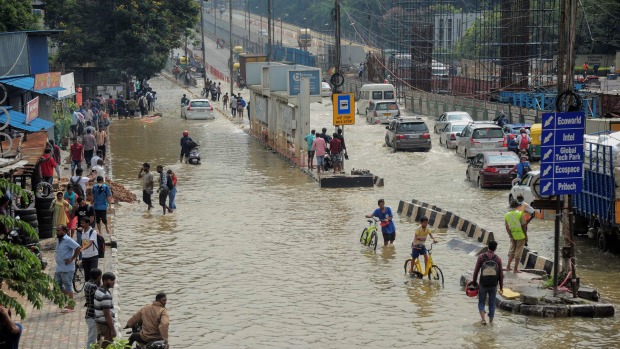
Last summer, a planned on-site review didn’t take place.
Not because of budgets.
Not because of schedules.
But because a manufacturing plant was flooded overnight after unusually heavy rain.
Roads were submerged. Power failed. Operations stopped.
What stayed with us wasn’t the disruption—it was how normal the conversation felt.
And that is perhaps the clearest signal of all: climate change has quietly become a business condition.
From Weather Event to Boardroom Risk
Extreme rainfall, floods, heatwaves, and power disruptions are no longer rare or unexpected. They are recurring events that directly affect operations, supply chains, employee safety, and asset reliability.
As the latest climate science puts it, the issue is no longer uncertainty—but urgency.
The IPCC has stated clearly:
“Human influence has warmed the atmosphere, ocean and land. Widespread and rapid changes have occurred.”
Calling the same findings out to world leaders, António Guterres described the IPCC report as:
“A code red for humanity.”
For businesses, this “code red” shows up as downtime, damaged assets, health risks to workers, insurance pressure, and disrupted supply commitments.
Why ESG Is No Longer Optional
For many organizations, ESG began as a reporting or investor-facing exercise. That phase is ending.
Today, ESG is increasingly driven by:
Regulatory mandates (such as mandatory BRSR disclosures in India)
Investor and lender scrutiny on climate risk and governance
Customer expectations across global supply chains
Insurance and financing conditions linked to risk exposure
In simple terms: companies are being required—not requested—to demonstrate how they manage climate and sustainability risks.
As the UN Framework Convention on Climate Change (UNFCCC) has repeatedly emphasized:
“Climate change poses an urgent and potentially irreversible threat to human societies and the planet.”
For businesses, managing that threat is now part of fiduciary responsibility.
ESG as Risk Management, Not Reputation Management
When approached correctly, ESG is not about optics. It is about anticipating risk and protecting value.
A robust ESG framework helps organizations:
Identify climate and environmental risks before they escalate
Improve resilience of operations and supply chains
Strengthen credibility with investors and regulators
Make sustainability data auditable, defensible, and decision-useful
In other words, ESG has moved from “nice to have” to core business infrastructure.
Where EHS Makes the Difference
This is where Environment, Health & Safety (EHS) becomes critical.
EHS is where ESG commitments become operational reality:
Safety systems protect people during extreme events
Environmental controls reduce regulatory and liability exposure
Emergency preparedness determines whether disruption is contained—or catastrophic
Organizations that integrate EHS into ESG move from reactive firefighting to predictable, managed resilience.
The Real Question for Leadership
Most organizations today acknowledge climate risk. The real differentiator is action.
Are risks being identified at site and supply-chain level?
Are ESG disclosures backed by real operational controls?
Is resilience built into planning—or assumed?
As the IPCC has warned:
“Every fraction of a degree of warming matters.”
For businesses, every delayed decision matters too.
The Takeaway
Climate change is no longer a future risk.
Regulation, science, and markets have aligned—and expectations have shifted.
Organizations that integrate climate risk management, ESG strategy, and EHS execution will be better prepared to protect people, assets, and long-term value.
Because in a world where disruption is becoming normal,
standing still is no longer neutral—it is risky.